


In this edition of Innovation Stories, we explore the evolution of Cleanwatts Digital and the new kWant Energy platform, which brings together technology, management and innovation to address the challenges of the energy transition.
Cleanwatts Digital recently launched kWant Energy, a new platform designed to provide an integrated response to the challenges of the energy transition. The solution supports projects throughout their different stages, from initial assessment and solution design to financing, implementation, management and optimisation of energy assets.
In this edition of Innovation Stories, we invited Cleanwatts Digital to share the vision behind kWant Energy, the challenges it aims to address and the role of technology in building more efficient, resilient and sustainable energy systems.
In this conversation, we speak with José Basílio Simões, Co-founder and Executive Director of Cleanwatts, about the company’s evolution, the role of energy storage, the application of artificial intelligence and data analysis in energy management, and the potential of Virtual Power Plants to transform the relationship between companies, communities and the energy system.

In Conversation with José Basílio Simões | Co-founder and Executive Director of Cleanwatts
To start, could you briefly introduce Cleanwatts Digital and explain how the company and its activities in the energy sector have evolved?
A: It is impossible not to mention the April 2025 blackout when discussing Portugal’s energy sector today, and this was also an important turning point for us, leading to the development of new strategies.
Following the successful completion of a management buyout, the change effectively resulted in the Digital business becoming independent from the Cleanwatts Group and making its technology available to the entire market.
This allowed us to refocus on energy software, which was at the core of the companies that preceded Cleanwatts Digital, as a priority, and to strengthen our mission of accelerating the energy transition through advanced digital solutions, integrating artificial intelligence, energy storage and renewable asset optimisation.
Cleanwatts Digital recently launched kWant Energy. What motivated the creation of this new platform, and what change does it represent in the company’s evolution?
A: kWant reflects the company’s evolution towards a broader offering in the energy sector and a more comprehensive approach to our role in the energy market.
It represents the way the company has evolved and the response we want to provide to the current context of the energy sector, at a time when the name Cleanwatts Digital no longer fully reflected the scope of our offering.
Today, we are an integrated energy platform, and kWant maintains our core areas of activity in battery energy storage solutions and intelligent energy management, the two areas we consider critical to grid stability and business competitiveness.
kWant Energy is presented as a hybrid and cross-cutting platform that supports projects from design through to operation. What does this integrated approach mean in practice, and what challenges does it help address?
A: kWant Energy supports each customer throughout the entire project lifecycle, from the initial assessment and data collection to solution design, financing structuring, asset installation and ongoing operational management.
This integrated approach results in customised projects, adapted to consumption patterns and operational needs, enabling each organisation to achieve its sustainability objectives, whether these involve reducing costs, meeting decarbonisation targets or other goals.
The platform integrates different dimensions: project design, project management, data storage, reporting, financing solutions, energy efficiency, renewable energy production, electric vehicle charging and asset management. How can this integration transform the way organisations manage their energy?
A: When we look at the different aspects of a company’s operational management that our platform addresses, we need to start with the key advantage we have in front of us: information centralisation.
A company that needs to aggregate and process data will always benefit from being able to find everything it needs on a single platform.
This brings us, directly or indirectly, a crucial advantage: the centralisation of information and unified management of energy assets not only allows them to communicate with one another, but also ensures that they all work towards the same objectives.
An infrastructure that combines solar generation, electric vehicle charging and energy storage, with all these assets managed together, avoids energy waste and excessive costs because all these assets operate as part of an optimised ecosystem. Minientrevista Inova-Ria
Energy storage is playing an increasingly important role in the energy transition. What challenges faced by companies and the electricity grid can be addressed through the combination of batteries, software and advanced optimisation models?
A: An isolated battery runs the risk of becoming an expensive and passive asset.
We focus on the synergy between storage and management to address the challenges brought by the energy transition simultaneously.
For businesses, we can eliminate peak consumption costs through peak shaving, carry out tariff arbitrage by charging batteries during cheaper periods, and ensure operational resilience in the event of grid failures.
For the electricity system, software can act within milliseconds to balance frequency and absorb the volatility of renewable energy sources.
In addition, by aggregating several of these batteries into Virtual Power Plants (VPPs), we can relieve grid congestion without the need for costly infrastructure works and create new revenue streams for companies by enabling them to sell their flexibility to the market.
Artificial intelligence and data analysis are taking on a central role in energy management. How do these technologies enable the transition from reactive management to more predictive and optimised asset management?
A: Far from being merely a technological trend, AI has become an essential tool for managing energy.
One of its most relevant contributions is undoubtedly its predictive capability: we have our own models that allow us to anticipate both renewable energy production and consumption patterns. This forecasting capability has significantly reduced uncertainty and facilitated the continuous balancing of supply and demand.
It also enables real-time optimisation: sophisticated algorithms automatically adjust resource use, maximising efficiency and reducing costs.
Another crucial dimension is data integration. Sensors, smart meters, buildings and vehicles generate huge volumes of information. AI transforms this dispersed data into value, enabling coordinated and actionable decision-making and resulting in the efficient management of smart grids, microgrids and energy communities.
kWant Energy aims to support companies and organisations in reducing costs, increasing autonomy and decarbonising their operations. What kind of concrete results or benefits can customers expect from this approach?
A: Regardless of the objectives of each company or organisation, achieving those objectives will involve changes in energy consumption — not necessarily reducing consumption, but optimising it so that only the energy necessary to create value for the consumer is used.
For this reason, we have recorded average annual savings of 40% for organisations seeking storage solutions, combined with new revenue streams when these are integrated with energy communities and existing solar generation.
Of course, each project has its own specific characteristics, but reducing operational costs and CO₂ emissions is part of every project, alongside simplifying day-to-day energy management.
Virtual Power Plants and the ability to aggregate different distributed energy resources are among the concepts associated with the platform. What new opportunities can this model create for companies, communities and the energy system itself?
A: Virtual Power Plants (VPPs) transform the way we look at Distributed Energy Resources, from solar panels and batteries to electric vehicle charging stations and flexible industrial consumption — by aggregating them through our platform into a single, intelligent digital power plant.
For companies, this model transforms operational costs and passive assets into new revenue streams through active participation in flexibility markets and system balancing services.
For communities, VPPs enable the efficient sharing of locally generated clean energy, making access to lower costs more widespread and strengthening local energy autonomy.
Finally, for the energy system itself, this model provides grid operators with the stability and flexibility required to absorb renewable intermittency in real time, relieving infrastructure congestion and avoiding major investments in grid expansion works or polluting peaking power plants.
In short, VPPs are the driving force behind a truly decentralised, digitalised and democratic energy ecosystem.
The energy transition increasingly requires collaboration between technology companies, industry, energy operators, public authorities and other stakeholders. How important are these partnerships in accelerating the adoption of new solutions and turning technological innovation into real-world impact?
A: The energy transition cannot be achieved in isolation by a single stakeholder.
At Cleanwatts Digital, we see technological innovation as the catalyst, but real impact can only happen through collaborative ecosystems.
Technology companies bring agility and algorithms; industry and energy operators provide physical assets, real-world data and market scale; and public authorities create the regulatory framework and encourage local adoption.
These partnerships are essential to accelerating the validation of new solutions in real-world environments, as they help remove financial and regulatory barriers and ensure that systems are interoperable.
Without this multisectoral cooperation, we risk having brilliant technologies trapped in pilot projects.
Collaboration is the bridge that transforms innovative software into large-scale decarbonisation, while ensuring security of supply and tangible economic value for society as a whole.
Finally, what future do you envision for intelligent energy management, and what role do you want kWant Energy to play in this transformation?
A: The launch of kWant comes at a time when Portugal is undergoing a profound transformation of its electricity system, driven by the growth of renewable generation, greater electrification of consumption, the widespread adoption of electric vehicles and the increasing use of electrical equipment. These trends are creating new challenges for the grid, with greater volatility between periods of excess generation and periods of higher demand.
In this context, energy storage plays a strategic role by allowing energy to be stored when availability is higher and used during periods of greater need, helping to stabilise the grid, reduce costs and increase energy security.
And this is only possible when storage is combined with the right management tools.
With this new solution, we aim to simplify, accelerate and scale the energy transition, putting technology, financing and operations at the service of a more decentralised, efficient and resilient energy system.
That is the reality we want to see in the Portuguese energy landscape in the coming years, and it is what we work towards every day.
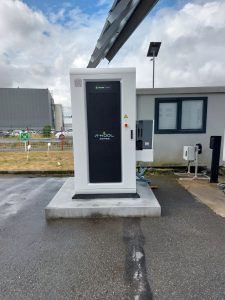
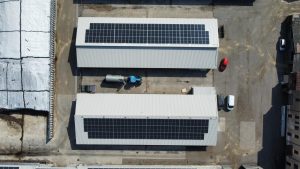
Images visible through technology

Final Note:
For more information about Cleanwatts, visit: https://cleanwattsdigital.com/pt/home/
Conclusion
The Cleanwatts story demonstrates how technological innovation can accompany the transformation of an industry and respond to increasingly complex challenges. From intelligent energy management and energy storage to artificial intelligence and Virtual Power Plants, the company’s evolution reflects an increasingly integrated approach to the energy transition.
More than simply providing technology, kWant Energy aims to connect data, assets, financing and operations, creating the conditions for companies and organisations to optimise consumption, reduce costs, increase resilience and accelerate their decarbonisation goals. At the same time, Cleanwatts’ approach reinforces the importance of collaboration between technology companies, industry, energy operators and public authorities to turn innovation into real-world impact.
And perhaps that is the key takeaway from this Innovation Story: the energy transition depends not only on new technologies, but on our ability to integrate, apply and put them to work in building a more efficient, decentralised and resilient energy system.
kWant Energy was created precisely with this purpose: to simplify, accelerate and scale the energy transition, putting technology, financing and operations at the service of a new energy paradigm.

